[ThunderHawk] DP1 Ideation
[ThunderHawk] DP1 Ideation
20190447 Dongseop Lee, 20200096 Seyeon Kim, 20200872 Nuzup Shadiev
Problem Statement
Collaboration is crucial in choreography, but since the methods of collaboration are unstructured, there is a lot of inefficiency in communication.
Problem Background
The paper “Diversity’s Harvest: Interactions of Diversity Sources and Communication Technology on Creative Group Performance” by Giambatista and Bhappu (2010) demonstrates that communication methods significantly impact group performance. By comparing computer-mediated communication (CMC) and face-to-face (FTF) communication, the study found that CMC is particularly effective for improving performance in diverse groups. FTF communication, while rich in cues, can sometimes hinder efficiency by confusing participants. Interviews with professionals and school club members revealed dissatisfaction with current communication practices in choreography. Inefficient communication leads to wasted resources, poor performance quality, and team discord, making the need for better collaboration methods crucial.
Motivation
Group choreography requires a unified performance, but face-to-face (FTF) communication often introduces issues like unconscious biases, instant reactions, or categorization that hinder effective collaboration. Research suggests that creative ideas can be stifled by immediate skepticism, further complicating communication. While a communication expert might mitigate some of these challenges, their lack of expertise in choreography limits their effectiveness in this context. Therefore, we conclude that social computing is the best-fit solution for addressing communication inefficiencies in choreography, as it enables structured yet flexible collaboration, allowing ideas to flow freely without the hindrances of FTF interaction.
How Might We (HMW) Questions
10 HMW Questions
Colored questions are the ones that have finally been selected.
- HMW help performers divide tasks and know who’s doing what in a project?
- HMW improve the way feedback is shared and understood during choreography rehearsal sessions?
- HMW help performers find the right people to work with easily?
- HMW make members to suggest creative idea easier?
- HMW make it easier for performers to quickly share feedback efficiently?
- HMW help dancers and choreographers to easily keep track and manage changes in choreography over time?
- HMW ensure that all members have a clear understanding of the choreography vision and goals?
- HMW make good collaboration possible without structured communication methods?
- HMW ensure that all group members have equal opportunities to contribute ideas during the choreography process?
- HMW let directors deliver their guidance more clearly?
3 Selected HMW Questions
- HMW make it easier for performers to quickly share feedback efficiently?
- HMW help dancers and choreographers to easily keep track and manage changes in choreography over time?
- HMW ensure that all members have a clear understanding of the choreography vision and goals?
Selection Process
- Check whether each question tackles problems closely related to our problem statement.
- Check whether it is too narrow or too broad.
Solution Ideas
Colored solutions are the ones that have finally been selected.
1. HMW make it easier for performers to quickly share feedback efficiently?
- Directors can accumulate feedback and deliver them to the performer so that there are no overlapping feedback.
- Give incentive or status for fast-responding or quality feedback.
- Provide a way to leave timestamped notes or video comments during rehearsals, allowing instant feedback on specific moments in the choreography.
- Create bulletin board that everyone can suggest their idea or feedback and start a conversation thread for any idea.
- Modulize each dance movement or route and create a flow chart of choreography for each member. It can also be modified simultaneously by multiple members.
- Add direct message function to talk closely about idea with a certain member.
- Create templates to help directors give clear, useful feedback on timing, expression, and technique, making sure the feedback is short and effective.
2. HMW help dancers and choreographers to easily keep track and manage changes in choreography over time.
- Create a digital tool that saves each change in the choreography, so dancers can track and go back to earlier versions if needed.
- Update changes to a platform that can be accessible to both choreographers and dancers.
- Allow the director to collect feedback and idea suggestions regularly and members to check it on one site.
- Specify previous conversations or references for new idea suggestions or conversations.
- Design a visual timeline that shows how the choreography develops, with options to add notes on important changes and decisions during rehearsals. This makes it easier to follow the creative process.
3. HMW ensure that all members have a clear understanding of the choreography vision and goals?
- Make a shared digital mood board with visual and audio references that show the vision and goals, so all members can access it.
- Create a place to freely ask questions to the directors.
- At the start of rehearsals, give a detailed project brief with key goals, vision, and style choices.
- Share updates on a cloud platform so everyone can check and stay aligned during the process.
- Have director-centric sessions so that performers can be given clear and unified directions.
- Show everyone or the director who did not check his/her must-see resources.
3 Selected Solutions
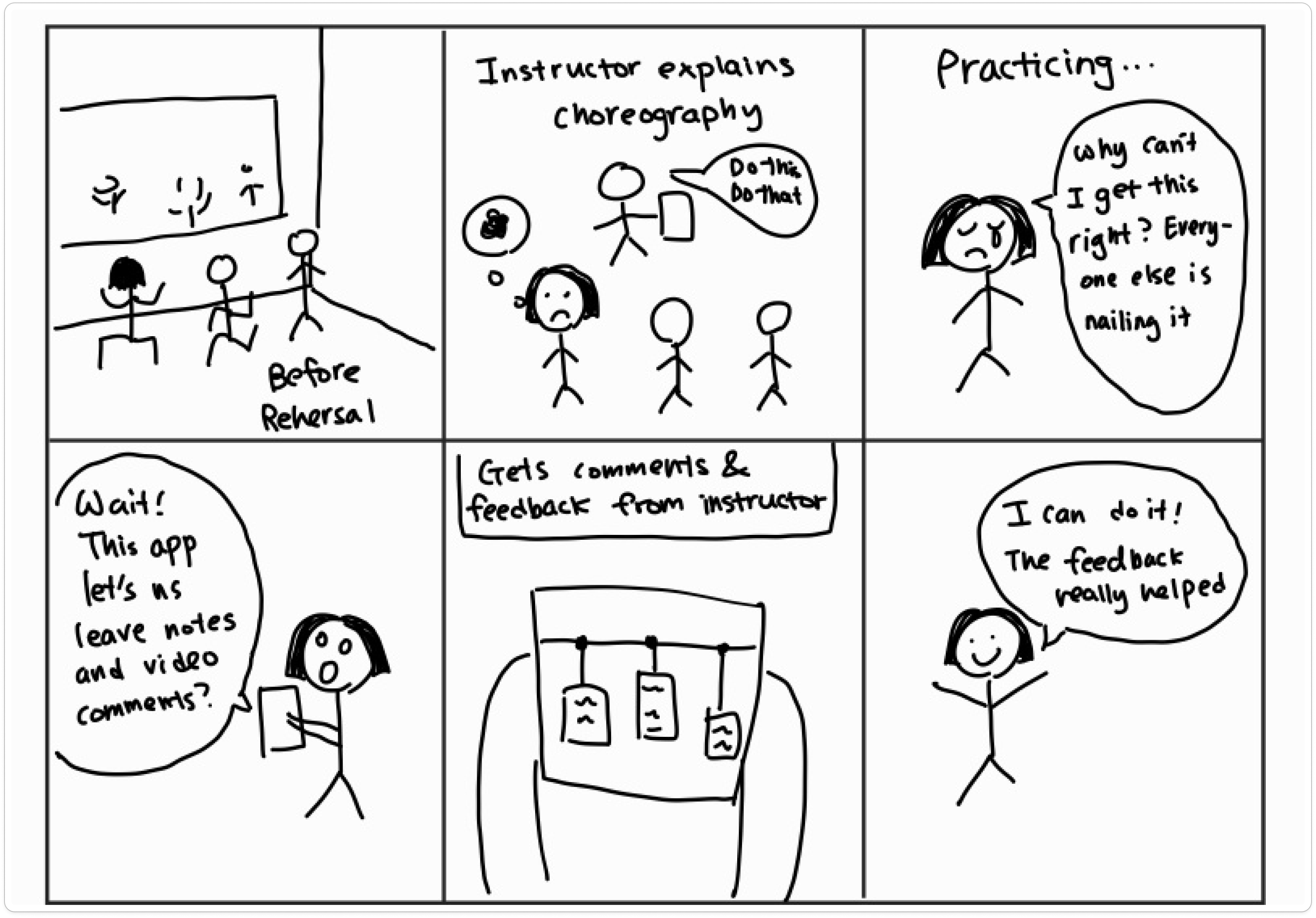
- Provide a way to leave timestamped notes or video comments during rehearsals, allowing instant feedback on specific moments in the choreography.
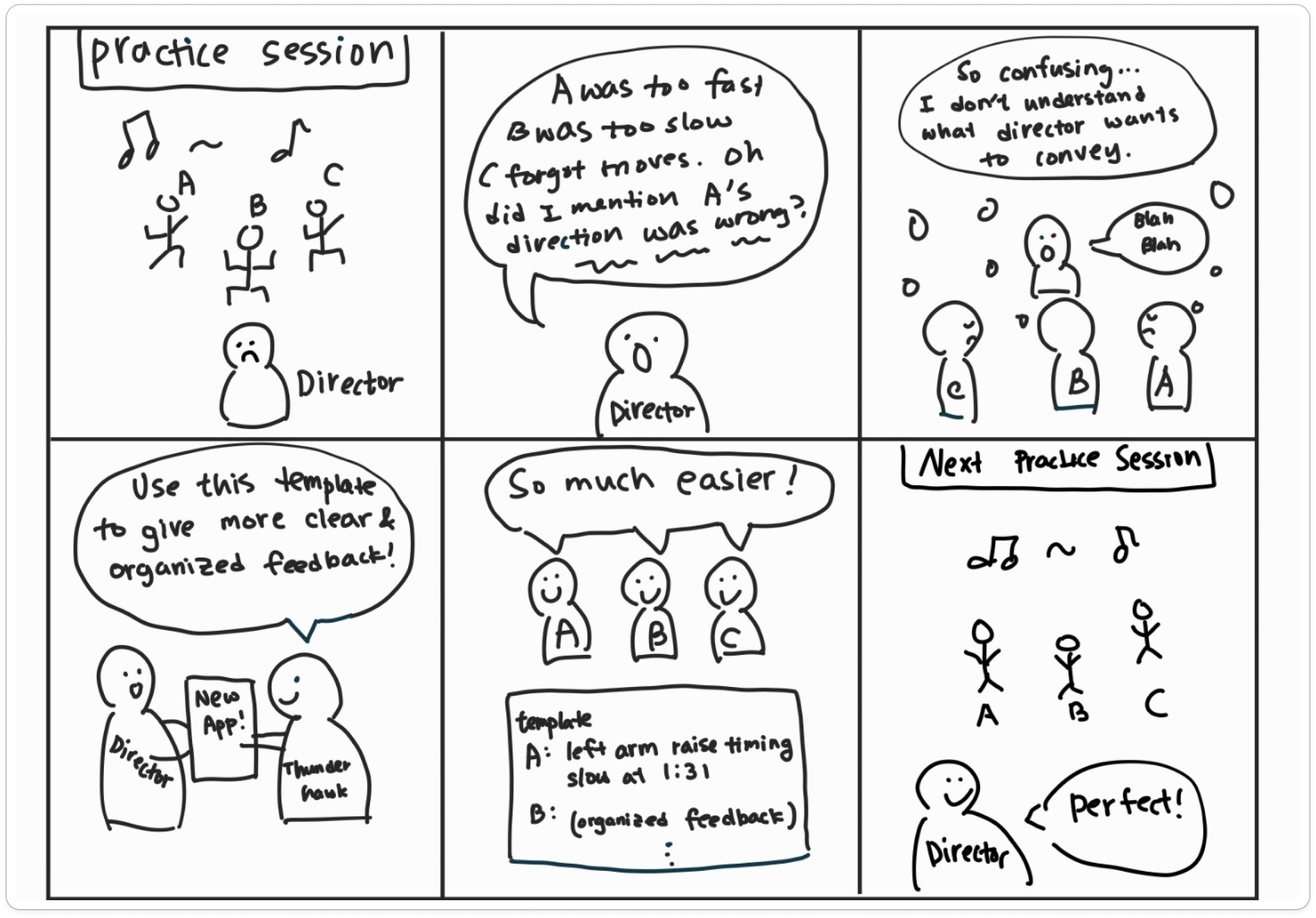
- Create templates to help performers give clear, useful feedback on timing, expression, and technique, making sure the feedback is short and effective.
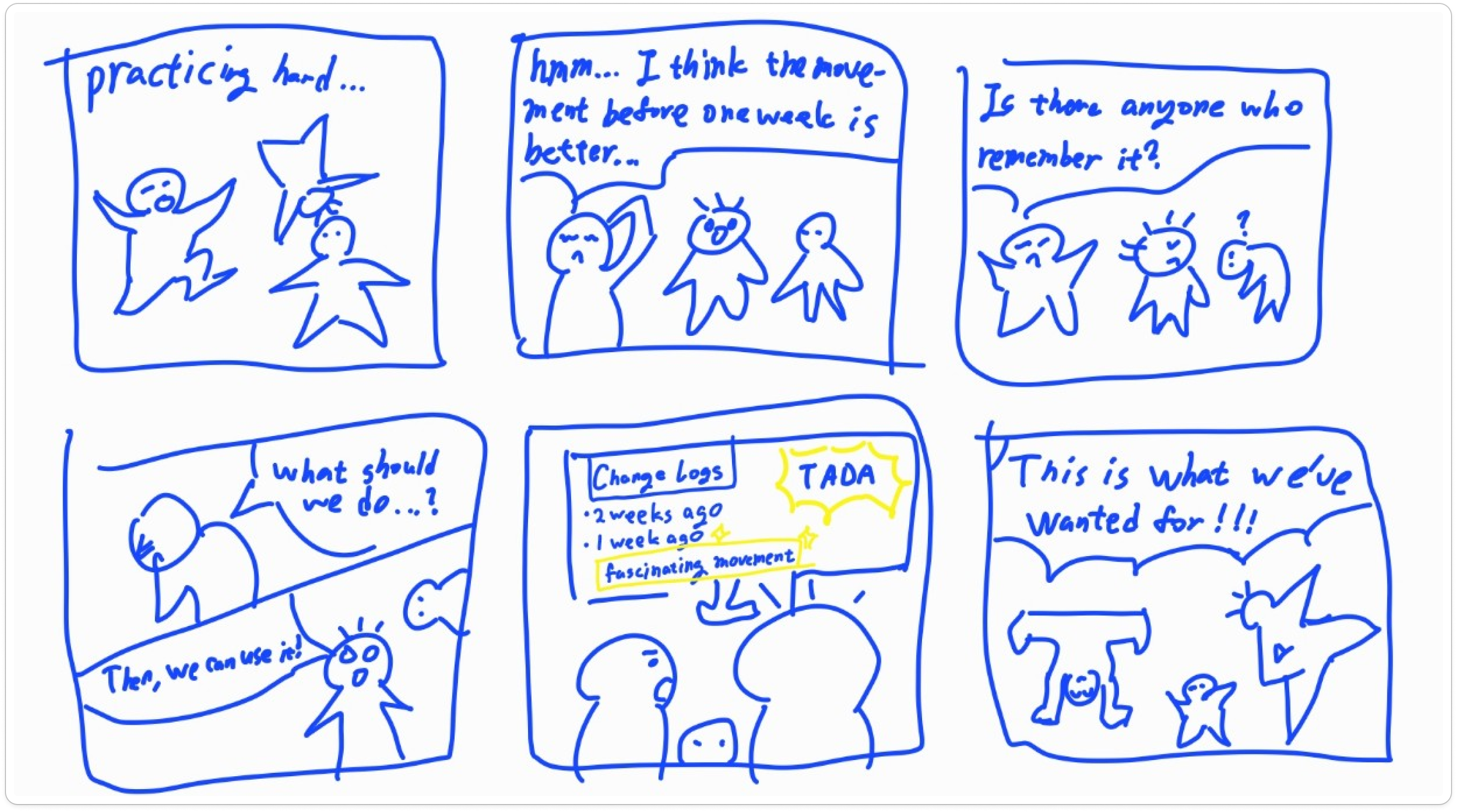
- Create a digital tool that saves each change in the choreography, so dancers can track and go back to earlier versions if needed.
Storyboards
Provide a way to leave timestamped notes or video comments during rehearsals, allowing instant feedback on specific moments in the choreography.
Create templates to help performers give clear, useful feedback on timing, expression, and technique, making sure the feedback is short and effective.
Create a digital tool that saves each change in the choreography, so dancers can track and go back to earlier versions if needed.